Showing posts with label best cenospheres. Show all posts

Tuesday, 28 February 2017

Properties and Components of Cenospheres

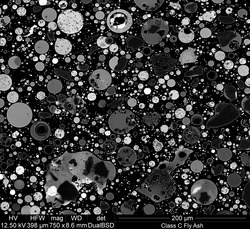
A cenosphere is a lightweight, hollow sphere made largely of silica and alumina and filled with air, metals, or gas. The Cenospheres are manufactured as a byproduct of coal combustion at thermal power plants. Cenosphere-based compounds were fabricated and categorized for their structural and mechanical properties such as tensile, flexural, impact and vibrant mechanical properties such as storage and loss moduli as a function of temperature. The structural qualities were characterized by Scanning Electron Microscopy (SEM) and Wide-Angle X-ray Diffraction (WAXD) though the thermal characterizations were prepared by conducting Differential Scanning Calorimetric (DSC) and Thermo-Gravimetric Analysis (TGA). The DSC studies revealed that increase in cenosphere content has resulted in a decrease in crystallinity of the composites.
fly-ash
The amount of separation in retrieving the Cenospheres from coal fly ash has been valued for both wet and dry separation processes through applying the terminal velocity concept of particles. The diameter and density of the particle are determined by sieving industrial cenospheres and coal fly as type IV. Depending on the estimation, the dry separation process executed similarly to the wet separation process, with a most favorable Newton's efficiency of 0.54, just slightly lower than that of the wet separation process of 0.6. 
The mortar cubes can be made with a combination of Cenospheres and silica fume as a standby for the cement. The test on mortar cubes shown that cement loses its strength because of the replacement of cenosphere, but the loss can be calm down by adding silica fume to it. The strength decrement decreases by ages, displaying that the strength attainment is reduced by the addition of cenosphere. The microstructure has also been studied to show the disintegrated structure on advanced replacement of cenosphere. It was also noted that the hydration products react with cenospheres and, due to this; decline in the quantity of portlandite was witnessed resulting in strength decrement.

Monday, 9 January 2017

Quality Approved Cenosphere from India

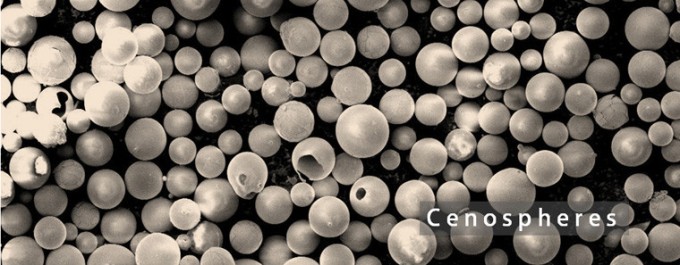
Like fly ash, cenospheres are naturally occurring by-products of the burning process at coal-fired power plants. Unlike fly ash though, cenospheres are lightweight, inert, hollow spheres comprised largely of silica and alumina and filled with air and/or gases. Since they are inert, they are not considered a pozzolan. And because they are very small and have high compressive strengths, cenospheres can be used as structural lightweight filler. 

slideshow_1

Cenosphere from India has some general properties:
  • Chemical Properties:
  • Silica: 48% – 74%
  • Alumina: 26% – 45%
  • Iron: 1.5% – 4.00%
        2     Physical Properties:
  • Size: 75-400 microns
  • Bulk Density: 0.20-0.25 grams per cubic centimeter (g/cc) 
  • Specific Gravity: <0.4 g/cc
  • Compressive Strength: ~90% survival @ 2500psi
  • Softening Point: 1040 degrees C
  • Color: Light tan 
Cenosphere from India can be studied through Chemical engineering.  The progress of the Cenosphere Enhancement and Optimization Project is an initiative that seeks to improve existing methods of cenosphere extraction. Cenosphere is primarily used to create lightweight cement. It is also a good filler for polymers and its benefits are well-noted, particularly in the construction industry. Cement made with cenosphere is much lighter and this eases the burden shouldered by construction workers on a daily basis.

How cenosphere from India are produced?

Cenospheres are produced in very large amount in thermal power plants. They are always looked upon as fillers used to reduce the density and cost of the polymer. If cenosphere particles are allowed to remain properly dispersed by taking it in lower concentration, significant improvement in its mechanical, thermal, electrical, crystallinity, colorimetric and morphological properties are expected. To make it happen, epoxy/cenosphere composites were prepared, having lower concentration of cenosphere. Concentration of cenosphere in epoxy, cured with triethylenetetramine, was changed as 0, 3, 5, 7 and 10. Tensile Strength, Tensile Modulus, Percentage Elongation at Break and Crystallinity decreased, whereas, Flexural Strength and Flexural Modulus were found to have increased by 50% and above 100% respectively at 7 phr loading of cenosphere in epoxy. Thermal and electrical stability also increased with increase in concentration of cenosphere in the epoxy; however, the samples became blackish with increased addition of cenosphere. Using SEM analysis it was found that, cenospheres were properly and uniformly dispersed at 7 phr concentration and formed aggregates at 10 phr concentration.